
How Inflation Affects Your Savings (And How to Protect Your Money) in 2026
Inflation quietly reduces the value of your money every year. Learn how it works and the smartest ways to protect your savings in 2026.

Table of Contents
- What Is Inflation?
- How Inflation Reduces Your Purchasing Power
- Why Keeping Cash in the Bank Isn't Always Enough
- Best Ways to Protect Your Savings From Inflation
- High-Yield Savings Accounts
- Treasury Inflation-Protected Securities (TIPS)
- Index Funds and ETFs
- Dividend Stocks
- Real Estate
- How Inflation Impacts Retirement Planning
- Common Mistakes People Make During Inflation
- Inflation Protection Checklist
- Frequently Asked Questions
- Does inflation always reduce savings?
- Is a savings account enough to beat inflation?
- What investments usually outperform inflation?
- How much inflation is considered healthy?
- Should I invest during periods of high inflation?
- Final Thoughts
- Related Articles
- Sources
How Inflation Affects Your Savings (And How to Protect Your Money) in 2026
Inflation is one of the biggest hidden threats to your financial future. While your bank balance may stay the same, the purchasing power of your money gradually declines as prices rise.
In 2026, inflation remains one of the most important topics for anyone trying to build wealth, save for retirement, or simply protect their hard-earned money. Understanding how inflation works—and how to defend against it—is essential for long-term financial success.
What Is Inflation?
Inflation is the rate at which the prices of goods and services increase over time. As inflation rises, every dollar buys slightly less than it did before.
For example, if annual inflation is 3%, something that costs $100 today will cost about $103 next year. While that may not sound significant, the effects compound over many years.
The Consumer Price Index (CPI), published by the U.S. Bureau of Labor Statistics, is one of the most widely used measures of inflation in the United States.
How Inflation Reduces Your Purchasing Power
The biggest danger of inflation isn't seeing higher prices today—it's losing purchasing power over the long term.
Imagine you have $10,000 sitting in a savings account earning almost no interest.
| Years | Value Needed to Maintain Purchasing Power (3% Inflation) |
|---|---|
| Today | $10,000 |
| 5 Years | $11,593 |
| 10 Years | $13,439 |
| 20 Years | $18,061 |
Even though your account balance may remain at $10,000, it will buy significantly less in the future.
This silent erosion is why investors often describe inflation as a "hidden tax."
Why Keeping Cash in the Bank Isn't Always Enough
Holding cash provides safety and liquidity, but too much cash can become expensive over time.
Traditional checking and savings accounts often pay interest rates well below inflation. As a result, your real return may actually be negative.
Keeping an emergency fund in cash is important, but long-term wealth usually requires investments capable of growing faster than inflation.
Best Ways to Protect Your Savings From Inflation
There is no perfect investment that completely eliminates inflation risk, but several strategies have historically helped preserve purchasing power.
High-Yield Savings Accounts
High-yield savings accounts generally offer much higher interest rates than traditional banks, making them an excellent place to store emergency funds while reducing inflation's impact.
Treasury Inflation-Protected Securities (TIPS)
TIPS are U.S. Treasury securities specifically designed to adjust with inflation. Their principal value increases as inflation rises, helping investors preserve purchasing power.
Index Funds and ETFs
Broad-market index funds have historically outperformed inflation over long periods.
Rather than trying to pick individual stocks, many investors build wealth by consistently investing in diversified index funds.
Dividend Stocks
Companies with strong dividend histories may provide both income and long-term capital appreciation.
Dividend growth can help offset the rising cost of living.
Real Estate
Real estate has often served as a long-term inflation hedge because property values and rental income tend to increase over time.
While real estate involves more risk and maintenance than financial assets, it remains an important component of many diversified portfolios.
How Inflation Impacts Retirement Planning
Inflation has an enormous effect on retirement planning.
A retirement portfolio that seems sufficient today may fall short decades from now if inflation is ignored.
This is one reason why retirement accounts such as Roth IRAs and diversified investment portfolios are essential for long-term financial security.
If you're pursuing Financial Independence, Retire Early (FIRE), inflation should always be included in your withdrawal assumptions and future expense estimates.
Common Mistakes People Make During Inflation
Many people unintentionally make financial decisions that worsen inflation's impact.
Common mistakes include:
-
Holding excessive amounts of cash.
-
Panic selling investments during market volatility.
-
Trying to time the stock market.
-
Ignoring long-term investing.
-
Failing to increase retirement contributions.
-
Spending more because prices are already rising.
Remaining disciplined is often more effective than constantly reacting to economic headlines.
Inflation Protection Checklist
Use this checklist to strengthen your financial position:
-
Build and maintain an emergency fund.
-
Invest consistently every month.
-
Diversify your investments.
-
Maximize retirement accounts when possible.
-
Avoid carrying high-interest debt.
-
Review your budget regularly.
-
Increase your savings rate whenever your income grows.
Small habits practiced consistently often produce better long-term results than attempting to predict future inflation.
Frequently Asked Questions
Does inflation always reduce savings?
Yes. If your money earns less than the inflation rate, its purchasing power declines over time.
Is a savings account enough to beat inflation?
Not always. Traditional savings accounts often earn less than inflation, although high-yield savings accounts can reduce the gap.
What investments usually outperform inflation?
Historically, diversified stock index funds, real estate, dividend-paying companies, and Treasury Inflation-Protected Securities have all helped investors combat inflation over long periods.
How much inflation is considered healthy?
Many central banks, including the Federal Reserve, generally target inflation around 2% per year because moderate inflation supports stable economic growth.
Should I invest during periods of high inflation?
For long-term investors, continuing to invest consistently is usually more effective than trying to wait for the "perfect" moment.
Final Thoughts
Inflation is unavoidable, but losing purchasing power doesn't have to be.
The most effective strategy isn't trying to predict every economic cycle—it's building strong financial habits that can withstand changing market conditions.
Maintaining an emergency fund, investing consistently, diversifying your portfolio, and focusing on long-term goals are some of the most reliable ways to protect your wealth from inflation.
The earlier you begin preparing for inflation, the more financial flexibility you'll have in the years ahead.
Related Articles
-
[What Is a Roth IRA?]
-
[How to Build a 6-Month Emergency Fund]
-
[Best FIRE Strategies in 2026]
-
[Best ETFs for Beginners in 2026]
-
[How Much Money Should You Save Each Month?]
Sources
-
U.S. Bureau of Labor Statistics (Consumer Price Index)
-
Federal Reserve
Frequently Asked Questions
Common questions about saving money.
Written by
FPG Editorial Team
Personal finance writers, editors and fact-checkers. Read about our editorial standards.
Share this article
Related Articles

The Best Budgeting Apps of 2026: Mastering Your Money in the Digital Age
Navigating personal finance in 2026 requires more than just a spreadsheet. We review the top budget apps helping Americans combat inflation and reach financial independence today.
Read More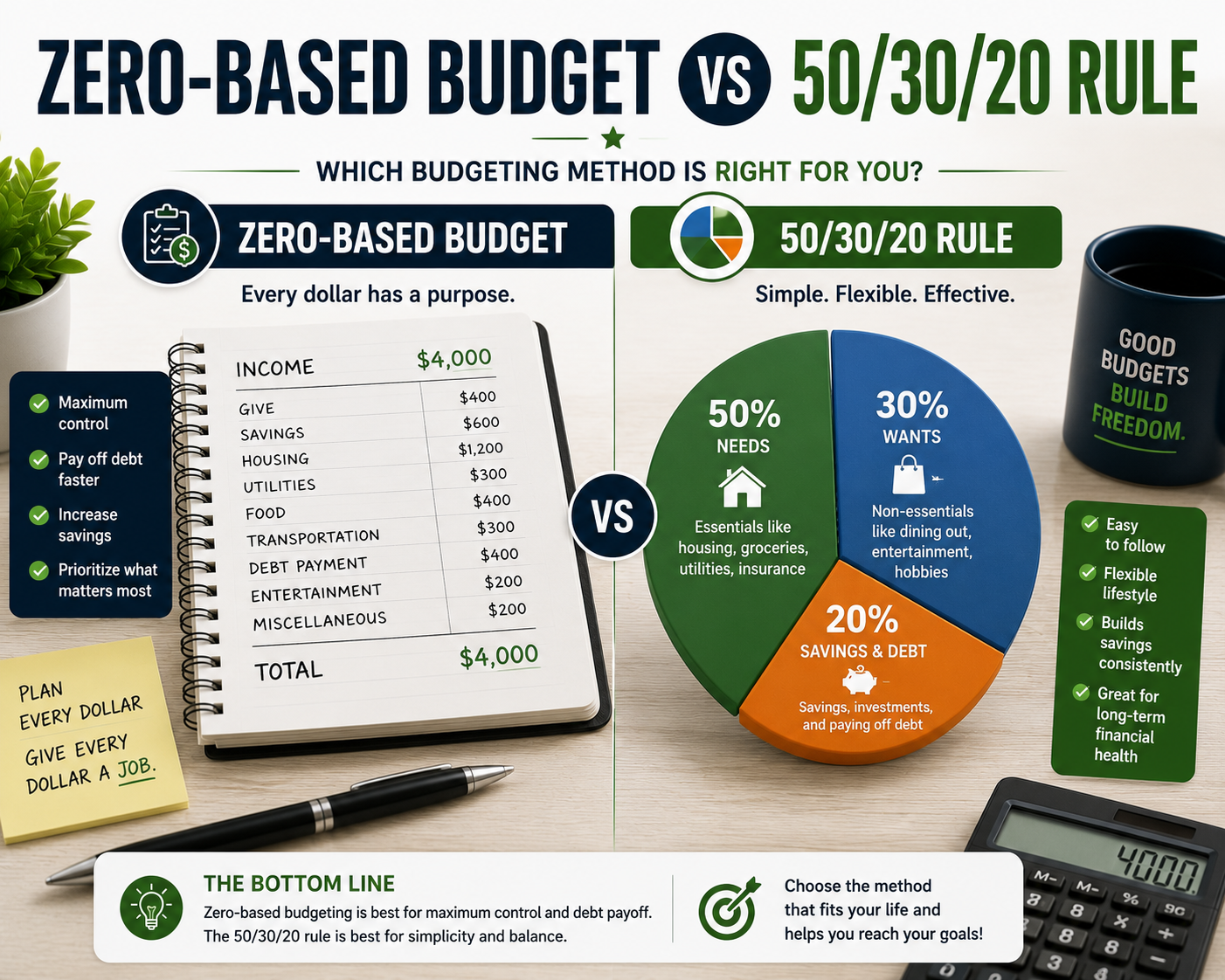
Zero-Based Budget vs. 50/30/20 Rule: Choosing the Best Framework for 2026
In the evolving economic landscape of 2026, choosing between a Zero-Based Budget and the 50/30/20 Rule depends on your financial granularity. Discover which system offers the stability you need.
Read More
How to Stop Living Paycheck to Paycheck: A Strategic Financial Guide for 2026
Living paycheck to paycheck remains a reality for more than half of Americans. In 2026, shifting economic landscapes require a tactical approach to cash flow management, automated savings, and strategic debt reduction to secure lasting financial freedom.
Read MoreRecommended Guides
Pick a financial goal and follow our step-by-step roadmap.
Popular Resources
Free calculators, templates and trusted finance tools.
Join Thousands of Readers Building Wealth Smarter
Get weekly financial insights, investing strategies, money-saving tips, and wealth-building guidance delivered directly to your inbox.
- Double opt-in
- No spam, ever
- Unsubscribe anytime